

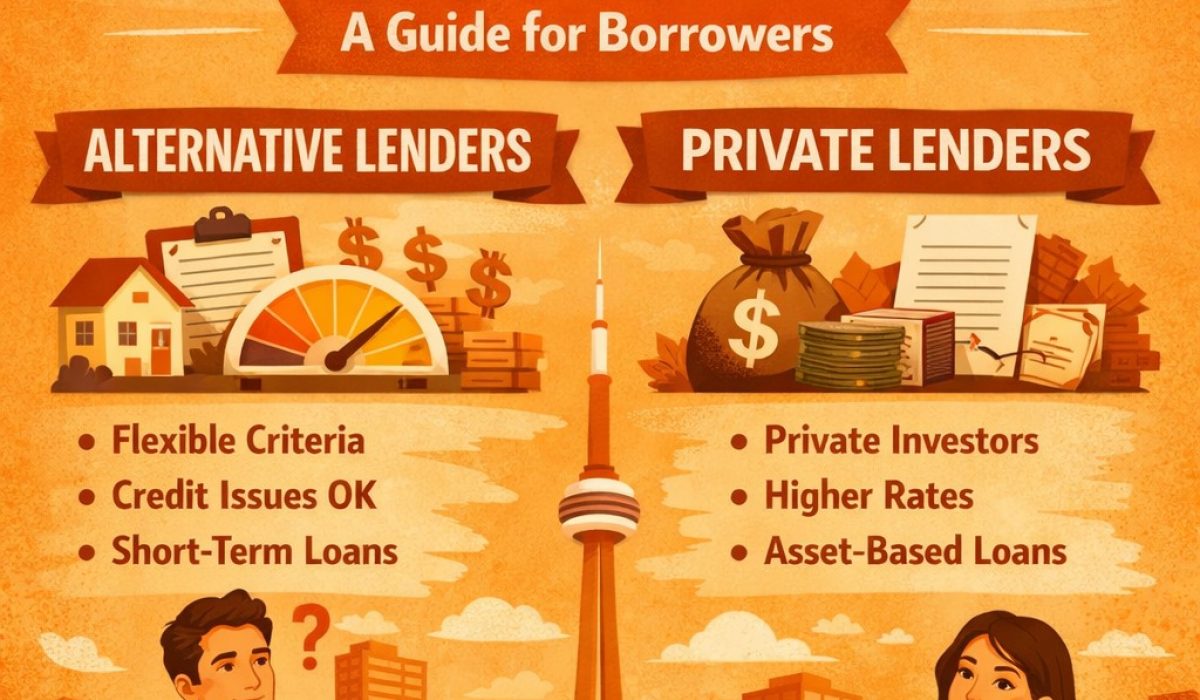
Understanding the Difference Between Alternative and Private Lenders in Canada: A Guide for Borrowers
In the ever-evolving Canadian mortgage market, distinguishing between alternative lenders and private lenders is crucial for borrowers seeking flexible financing options beyond traditional banks. A recent position paper from the Canadian Alternative Mortgage Lenders Association (CAMLA) sheds light on these differences, highlighting their structures, risks, and benefits. At mrates.ca, your trusted platform for comparing best mortgage rates in Canada, we break down this information to help you make informed decisions. Whether you’re exploring alternative mortgages or curious about private lending in Canada, understanding these options can lead to better financial outcomes.
Definitions: What Are Alternative and Private Lenders?
Alternative financiers in Canada are regulated mortgage lending institutions designed to serve creditworthy borrowers who might not qualify under strict traditional bank criteria. These include structures like Mortgage Investment Corporations (MICs), limited partnerships, and mutual fund trusts. They operate with defined capital pools, employing risk-managed strategies, transparent pricing, and detailed reporting.
In contrast, private lenders are typically individual or informal investors who use their personal capital to fund loans on a case-by-case basis. They often lack consistent underwriting standards, formal risk governance, and comprehensive regulatory oversight, which can introduce higher variability in their operations. If you’re comparing options, use our mortgage calculator to estimate how these financiers might affect your mortgage rates.
Who Do They Serve? Targeting Different Borrower Needs
Alternative lenders focus on creditworthy individuals who fall outside conventional bank requirements, offering structured and reliable financing solutions within a regulated environment. This makes them a go-to for those needing non-bank mortgages in Canada.
Private lenders, however, often cater to borrowers in need of short-term solutions, including more vulnerable populations. While this flexibility can be appealing, it comes with elevated risks, emphasizing the importance of due diligence. For tailored advice on mortgage trends in Canada, check out our best mortgage rates comparison.
Funding Sources: Institutional vs. Personal Capital
The funding models set these lenders apart significantly. Alternative lenders draw from regulated pools of capital, such as those in MICs or mutual fund trusts, ensuring a more stable and institutionalized approach to lending.
On the other hand, private lenders rely primarily on personal or informal investor funds, without the backing of formal capital structures. This can lead to more personalized but less predictable lending experiences.
Regulations and Oversight: Protecting Borrowers and Investors
One of the starkest differences lies in regulatory frameworks. Alternative lenders adhere to strict compliance standards, including oversight from boards, auditors, bank partners, real estate and securities regulators, and FINTRAC. They provide essential consumer protections like privacy policies, cybersecurity measures, complaint handling, and access to ombuds services.
Private lenders often operate with minimal consistent regulation, which can result in gaps that heighten risks of fraud, misaligned incentives, and market instability. Provincial bodies like the Financial Services Regulatory Authority of Ontario (FSRA) are stepping up supervision, but challenges remain. Stay informed on Canadian mortgage regulations through our mortgage blog.
Pros and Cons: Weighing the Benefits and Risks
Alternative Lenders
- Pros: Offer transparent pricing, robust risk management, and strong regulatory protections, benefiting consumers with reliable structures and basic safeguards not always found in private options.
- Cons: May be less flexible due to their structured nature, potentially limiting case-by-case customizations.
Private Lenders
- Pros: Provide high flexibility for unique borrower situations and short-term needs.
- Cons: Carry significantly higher risks, especially for vulnerable borrowers, due to inconsistent standards and potential for fraud or volatility.
Expert Insights from CAMLA: Advocating for Clarity
CAMLA emphasizes the need for regulators to establish “clear, public-facing definitions” to differentiate these lenders and expand education on private lending risks. As the “trusted voice for alternative mortgage lending,” CAMLA calls for tailored regulations that support responsible alternative lending in Canada while addressing high-risk private activities. With a surge in non-bank mortgage volumes, these insights are timely for anyone navigating the Canadian mortgage industry.
Market Context: Rising Demand for Non-Bank Options
The position paper notes a boom in non-bank mortgage volumes and private credit demand across real estate, prompting increased regulatory scrutiny. For borrowers in regions like Quebec, exploring these options alongside competitive rates is key—visit mrates.ca for mortgage rates in Quebec and nationwide comparisons.
Ready to find the right lender? Compare options at mrate.ca today. For the full details, read the original article here