

The “Rate Relief” Transition: Managing Short-Term Rates in Ontario’s 2026 Market
Last Updated: April 2026
If you’re an Ontario homeowner watching mortgage rates fluctuate like a roller coaster, you’re not alone. The past 24 months have tested even the most financially savvy borrowers. But here’s a strategy that’s gaining serious traction across the GTA, Ottawa, and beyond: short-term fixed mortgage products, often called “Rate Relief” terms.
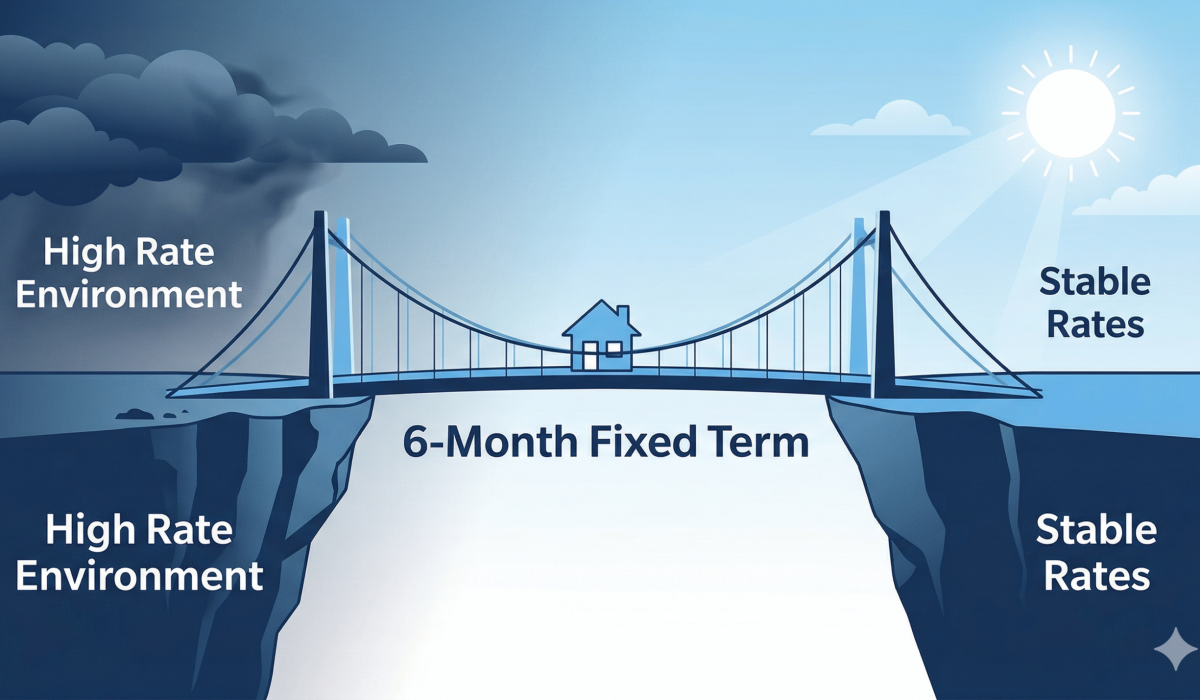
Instead of locking yourself into a 5-year commitment at today’s rates, these 6-month to 1-year fixed options let you bridge the gap while the Bank of Canada sorts out its monetary policy direction.
What Is a “Rate Relief” Short-Term Fixed Mortgage?
A Rate Relief product is exactly what it sounds like—a temporary mortgage solution designed to give Ontario homeowners breathing room during periods of high rate volatility. Rather than committing to a 5-year fixed at 4.5% or higher, you lock in for 6 months to 12 months, then reassess.
Think of it as renting a rate instead of buying one. You’re paying a small premium for flexibility—and in today’s uncertain environment, that flexibility is worth its weight in gold.
Key Features of Short-Term Fixed Mortgages:
- Term Length: Typically 6 months, though some lenders offer 9-month or 1-year options
- Rate Premium: Usually 0.15% to 0.40% higher than equivalent variable rates
- Renewal Flexibility: Convert to fixed, variable, or another short-term at maturity
- No Prepayment Penalties: Many short-term products allow full payout without IRD penalties
Why Ontario Homeowners Are Choosing Rate Volatility Strategy
The Bank of Canada has signaled multiple times that the current rate environment is transitional. For Ontario borrowers—especially those in high-value markets like Toronto, Mississauga, Hamilton, and Ottawa—the stakes are enormous.
Consider this scenario:
You’re purchasing a $850,000 home in Oakville. A 5-year fixed at 4.65% means you’re locked in regardless of what happens over the next 60 months. But a 6-month fixed at 4.85% lets you ride out the current uncertainty, then lock in when rates potentially drop to 3.75% or lower.
The math is compelling: that 0.20% “premium” on a short-term product could save you tens of thousands over the life of your mortgage if rates fall as expected.
Closing Cost Management: The Hidden Benefit
Here’s what most mortgage blogs won’t tell you: closing cost management becomes significantly easier with short-term products.
When you’re buying a home in Ontario, your closing costs can easily reach $25,000 to $40,000, including:
- Land Transfer Tax (Ontario + Toronto Municipal if applicable)
- Legal fees and disbursements
- Title insurance
- Home inspection and appraisal
- Moving expenses
- Immediate repairs and furnishing
A lower monthly payment during those critical first 6 months—achieved through a short-term product with competitive rates—gives you breathing room to absorb these costs without straining your budget.
Cash Flow Comparison: Short-Term vs. Long-Term Fixed
| Mortgage Amount | 5-Year Fixed (4.65%) | 6-Month Fixed (4.85%) | Monthly Difference |
|---|---|---|---|
| $500,000 | $2,823/month | $2,877/month | +$54 |
| $700,000 | $3,952/month | $4,028/month | +$76 |
| $900,000 | $5,081/month | $5,178/month | +$97 |
*Based on 25-year amortization. Actual rates vary by lender and qualification.
Yes, you pay slightly more monthly. But you’re buying optionality—the ability to pivot when the Bank of Canada makes its next move.
Who Should Consider Ontario Mortgage Rate Relief Products?
Short-term fixed mortgages aren’t for everyone. Here’s who benefits most:
✓ Ideal Candidates:
- First-time buyers facing high closing costs who need payment flexibility
- Renewal borrowers coming off ultra-low pandemic rates who want to wait for better options
- Self-employed professionals with variable income who prefer shorter commitments
- Investors who may sell or refinance within 12 months
- Anyone who believes rates will drop before their short-term matures
✗ Not Ideal For:
- Borrowers who need payment stability for budgeting purposes
- Those with tight qualification margins (short-term rates can be higher)
- Anyone uncomfortable with rate uncertainty
How to Execute Your Rate Volatility Strategy
Ready to explore Ontario mortgage rate relief options? Here’s your action plan:
- Get Pre-Approved First: Know your maximum qualification before exploring term lengths
- Compare Lenders: Not all offer competitive short-term products—work with a broker who has access to multiple options
- Calculate Your Break-Even: At what future rate does the short-term premium pay for itself?
- Set Calendar Reminders: 60 days before maturity, start shopping your renewal
- Have a Backup Plan: Know what you’ll do if rates stay elevated
The Bottom Line: Flexibility Has Value
In Ontario’s 2026 mortgage market, certainty is a luxury. A short-term fixed mortgage isn’t about predicting the future—it’s about positioning yourself to take advantage of it, whatever direction rates move.
The “Rate Relief” transition strategy works best when combined with disciplined closing cost management and a clear understanding of your financial goals. Whether you’re buying your first home in Brampton or renewing a $1.2M mortgage in downtown Toronto, the principle is the same: don’t pay for certainty you don’t need.
Ready to Explore Your Short-Term Mortgage Options?
At mrates.ca, we specialize in finding Ontario homeowners the right mortgage at the right time. Our team has access to over 50 lenders, including those offering competitive 6-month and 1-year fixed products.
→ Book Your Free Rate Consultation Today
Have questions about rate volatility strategy or closing cost management? Drop them in the comments below or reach out directly—we read every message.